Freeze-Dried vs. Air-Dried Dog Food: A Clear Breakdown for Health-Focused Pet Owners

You are in the high-end dog food section, and you are reading labels that state that it is minimally processed, high in nutrients and closer to nature. You are one of the increasing health-conscious pet owners, so you know that whatever you put in your dog’s bowl reflects them in terms of their wellbeing, health and lifespan. However, which is the real winner in the freeze-dried or air-dried battle when it comes to better nutrition delivery?
It is not simply a question of marketing statements, which is which of these two types of high-end food is better, but instead about the core differences in how food is prepared, preserved nutrition, and how the two are compatible with the needs of your dog. This comprehensive comparison of freeze-dried vs. air-dried dog food will equip you with the knowledge to make evidence-based decisions that support your dog’s optimal health.
Understanding the “Why”: The Philosophy Behind Minimal Processing
Conventional kibble is being properly challenged by health-aware pet owners. The conventional extrusion, in which most types of commercial kibble are made, exposes the ingredients to high-pressure temperatures of over 300 F. This high temperature destroys heat-sensitive nutrients such as B vitamins, vitamin C, probiotics, as well as other essential enzymes that help in digestion.
Also, the traditional processing may need artificial vitamins and mineral mixes in order to balance out the nutritional loss, binding, artificial preservatives, and flavour-enhancing materials to obtain the required texture and palatability.
The change in philosophy to freeze-dried and air-dried is such a fundamental concept of change: maintain the ingredients as close to the natural state as possible and guarantee the safety and shelf life of food. The two modes remove pathogens without excessive heat, which, in theory, leaves the levels of natural nutrients, enzymes, and other positive substances intact.
To make informed decisions, learning these less aggressive preservation approaches is a requirement among health-conscious pet owners who would prefer to have transparency and quality of their products and services.
In-depth Analysis: Freeze-Dried Dog Food.
The Freeze Draining Process is elucidated.
The process of freeze-drying, scientifically referred to as lyophilization has three stages that are accurate:
Freezing: Freezing of raw materials is done at high speed to a range of -40F to -50F at which the food material is frozen as ice crystals within the food.
Primary Drying: The frozen product is put in a vacuum chamber in which the pressure is substantially lowered. It causes ice crystals to sublime; that is, it transforms solid ice immediately into water vapour without going through the dry run as a liquid.
Secondary Drying: Remaining moisture particles adsorbed to the food structure are driven out via continued low-pressure exposition and reduce final moisture content to a matter of 2-5%.
This treatment maintains the original cellular structure of ingredients and eliminates almost all the moisture to produce a lightweight and shelf-stable product that does not need refrigerated storage.
Nutritional Benefits of Freeze-Dried Food
Freeze-drying process provides exceptional preservation of the nutrients:
Protein Integrity: This is because the amino acid profiles do not change significantly as the proteins are not subjected to high temperatures. This keeps it biologically viable and edible.
Enzyme Activity: The enzymes that occur naturally in raw meat and help in the digestion, and the absorption of nutrients are left relatively active by the time they have been freezing dried appropriately.
Vitamin Retention: Vitamins that are sensitive to heat, such as thiamine (B1), vitamin C, and folate, undergo very little damage, unlike traditional processing.
Stability of Fatty Acids: Omega-3 fatty acids which undergo oxidation at high temperatures, retain their anti-inflammatory properties.
Advantages of Freeze-Dried Options
Exceptional Nutrient Preservation: Freeze-dried food retains 95-98% of nutrients, offering nutrition that rivals fresh, raw ingredients, the gold standard for canine health.
Ultimate Convenience: Despite being minimally processed, freeze-dried food offers remarkable shelf stability (1-2 years unopened), eliminating the need for refrigeration while maintaining raw food quality.
Extremely Lightweight: Perfect for travel, hiking, camping, or emergency preparedness. You can pack significant nutrition in minimal space and weight.
Versatile Feeding Options: Can be fed dry as a crunchy treat, rehydrated for a fresh meal experience, or used as a powerful nutrient booster over any base diet.
Superior Palatability: The intense concentration of natural aromas and flavors makes freeze-dried food irresistible to even the pickiest eaters, solving mealtime challenges naturally.
Clean Ingredient Lists: The process requires no artificial additives, binders, or preservatives—just pure, whole food ingredients.
Ideal for Raw Feeding Philosophy: Offers all the benefits of raw feeding without handling raw meat, refrigeration concerns, or pathogen risks.
Portion Control Excellence: The lightweight, concentrated nature makes it easy to measure precise portions for weight management or specialized feeding protocols.
Considerations for Freeze-Dried Food
Investment in Quality: While freeze-dried represents a premium investment, many health- focused pet owners find that feeding smaller portions (due to nutrient density) and seeing improvements in their dog’s health—fewer vet visits, better coat quality, increased energy, ultimately provides excellent value.
Rehydration Flexibility: Some dogs enjoy the crunchy texture as-is, while others benefit from rehydration. This flexibility allows you to adjust based on your dog’s hydration needs and preferences.
Integration Example: Freeze-dried chicken feet exemplify this processing method’s ability to preserve complex structures. The freeze-drying process maintains the natural collagen, glucosamine, and chondroitin in their bioavailable forms, making them an exceptional joint-supporting treat that retains the texture and nutritional integrity of fresh chicken feet without refrigeration requirements.
In-depth Analysis: Air-Dried Dog Food
The Air-Drying Process- Knowledge Base.
Air-drying is one of the oldest techniques of food preservation advanced with the operation of temperature and humidity:
Fresh produce is cut to uniform portions and put in special drying facilities where air keeps flowing continuously. The temperatures are usually 140-180 F – not hot as to kill bacteria, and relatively low compared to extrusion temperatures.
For 24-48 hours, the amount of moisture decreases slowly by slowly; in the beginning, water is around 70% (fresh meat), then 14-18% (finished product). This gradual evaporation helps to concentrate nutrients and preserves much better the structure of the proteins and their enzymes compared to the process of high heat implementation.
The micro-soft to tough feeling is formed by the soft-firm texture, which is affected by certain processing parameters and is shelf-stable under ambient temperature on packaging.
Nutritional Value of Air-dried Food.
The medium temperature method of air-drying has some specific nutritional benefits:
Moisture removal under high temperature produces defibrillated food in which nutrients are condensed instead of destroyed.
Improved Digestibility: The amount of denaturation done to proteins is minimal and therefore, the proteins are easier to digest and assimilate by dogs. This is found to be advantageous, especially in dogs having a sensitive digestive system.
Natural Flavor Preservation: It maintains natural aromas and flavors by low temperature process treatment, frequently precluding palatability enhancers.
Probiotic Potential: Owing to its comparatively gentler air-drying, high-heat methods might not kill off all the beneficial bacteria as well as testing air-drying does.
Advantages of Air-Dried Options
Ready-to-Feed Convenience: No preparation required—simply measure and serve. Perfect for busy health-focused pet owners who want premium nutrition without extra steps.
Optimal Moisture Balance: With 14-18% moisture content, air-dried food provides hydration support beyond dry kibble while remaining shelf-stable, supporting urinary tract and kidney health.
Satisfying Texture: The naturally chewy consistency provides a rewarding eating experience and mild dental benefits through mechanical cleaning action as dogs chew.
Nutrient Concentration Excellence: Removing moisture concentrates proteins, fats, and nutrients, meaning smaller portions deliver complete nutrition, often requiring 30-40% less food by volume than kibble.
Superior Digestibility: The gentle processing maintains protein integrity, resulting in highly bioavailable nutrition that produces smaller, firmer stools—a sign of excellent nutrient absorption.
Natural Preservation: Often requires minimal to no synthetic preservatives due to low moisture content and controlled processing, keeping ingredient lists clean and recognizable.
Flexible Feeding Applications: Works beautifully as a complete diet, meal topper, high-value training treat, or rotational feeding component.
Extended Freshness: When stored properly, air-dried food maintains quality for months, providing excellent value and reducing waste.
Calorie Density Benefits: Ideal for active dogs, working breeds, underweight dogs, or picky eaters who need maximum nutrition in minimal volume.
Palatability Without Compromise: Maintains the natural meat aromas and oils that make food inherently appetizing to dogs, solving feeding challenges naturally.
Considerations for Air-Dried Food
Premium Nutrition Investment: Air-dried food costs more than conventional kibble, reflecting the quality ingredients and gentle processing. However, smaller serving sizes due to nutrient concentration often make the per-feeding cost comparable to feeding premium kibble plus supplements.
Texture Preference: While most dogs love the chewy texture, very small breeds or dogs with significant dental disease may prefer smaller pieces or slightly softened food (easily achieved by adding a splash of water or broth).
Integration Example: Air-dried chicken meal demonstrates this method’s ability to create a concentrated, highly digestible protein source. Its progressive drying method maintains the protein content of the amino acids whilst producing a food that serves well as a complete meal base, training food or as a protein-enhanced topper to regular kibble, which presents health-conscious pet owners with an opportunity to create an individualised nutritional plan.
Freeze-Dried vs. Air-Dried Dog Food: A Direct Comparison
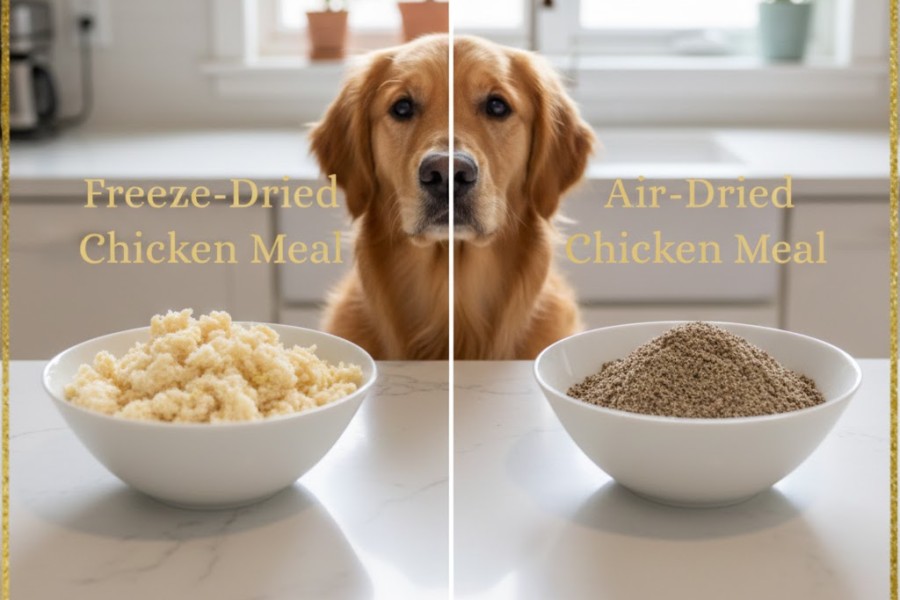
Understanding the freeze-dried vs. air-dried dog food debate requires examining specific attributes side by side:
Processing Method:
Freeze-Dried: Sublimation in a vacuum chamber, then dry using no heat; no heat.
Air-Dried: Regulated circulation of air under low heat over long duration.
Nutrient Retention:
Freeze-Dried: 95-98% of heat-sensitive nutrients retained (closest to raw);
Air-Dried: 85-90% retention; the same as excellent as kibble but a little less than freeze-dried.
Moisture Content:
Freeze Dried: 2-5 percent (needs rehydration to be fully nourished)
Air-Dried: 14-18% (ready to feed as-is)
Texture:
Freeze-Dried: Crisp, light and crumbly; remains soft upon any rehydration.
Air-Dried: thick soft, semi-wet; has solid texture.
Palatability:
Freeze-Dried There are very high: strong aroma and flavor.
Air-Dried: Extremely high; the flavors of natural meat were condensed.
Cost Range:
Freeze-Dried: $80-150+(calculated as dry mass) per pound.
Air-Dried: $40-$80 per pound
Storage Requirements:
Freeze-Dried M: Preserve in a cool, dry place; slight special treatment required; long shelf life.
Air-Dried: Keep dry and in a cool setting; keep well closed after opening; average shelf life.
Best Use Cases:
Freeze-Dried: Alternative diet, topper, high-value, freeze-dried meal, travel food, pickiness.
Air-Dried: Full course, training bread, kibble booster, food requiring dietary concentration in dogs.
The Choosing: Useful Advice to Health-Conscious Dog Owners.
The “best” option between freeze-dried vs. air-dried dog food isn’t universal – it depends on multiple individual factors that health-focused pet owners must evaluate:
Budget Limitations: Freeze-dried is the most expensive one. In the case of prohibitive cost, air-dried has a lot of advantages at a cheaper price. There are pet owners who are health conscious and manage to utilize freeze dried in a strategic manner as a topper to quality kibble and can stretch their budgets but still offer high-quality nutrition.
Tastes of the Dog: There are those that dogs have a particular taste that they would love more than the others. It is also good to provide tasting bits of the two to determine what your dog likes, and only then must buy them on a large scale.
Dental Health Requirement: The chewing action of Air-dried has the effects of cleaning the teeth in a mechanical fashion. On the other hand, dogs that are very ill with dental disease can find rehydrated freeze-dried food more comfortable.
Existing Health Conditions: Dogs having kidney issues: the increased levels of moisture are beneficial to freeze-dried food in case it is rehydrated appropriately. Working dogs, underweight dogs, and other dogs with high-calorie requirements may be fed on concentrated air-dried diets.
Lifestyle and Convenience: Repeat customers of freeze-dried products enjoy the light bulkiness attribute that freeze-dried possesses. Owners of particularly busy pets may attune to the convenience of air-dried, ready-to-feed offered by air-dried.
The Feeding Philosophy: Raw feeding purists tend to rely on freeze-dried food as the nearest commercial analog of a raw diet, whereas those wishing to find a compromise between the raw and conventional diets tend to favor air-dried.
A combination of these two alternatives may be a viable option that should be taken into consideration by health-conscious pet owners, who put a premium on the other aspects.
Integrating Strategies: Hybrid Strategy.
Many health-conscious pet owners find an ideal combination between freeze- drying and air- drying;
Air-Dried as Base + Freeze-Dried as Enhancement: Air-dried food forms the base of the meal (70-80% of all contents), where complementary proteins are added as nutritional topping (20-30%). The method is cost-effective, and nutrient diversity is maximised.
Rotational Feeding: Every week or every month, switch between freeze-dried and air-dried foods, introducing your dog to new sources of protein and new ways of its processing, which may help to avoid potential food allergies and encompass a wide range of nutrients.
Purpose-Specific Use: Air-dried when you regularly need to eat, freeze-dried when you need to travel, train, or otherwise, when you need to stoke the fire in the dog.
This combination will enable the health-conscious pet owners to exploit the potential benefits of each of the processing techniques, and at the same time control the expenses and meet the nutrition requirements of their dog as its demands and needs change.
Conclusion:
The choice between freeze-dried vs. air-dried dog food ultimately reflects your individual dog’s needs, your budget, and your feeding philosophy. Freeze-dried is the best preservation with the closest possible to raw feeding, whereas air-dried is the best in terms of great nutrition with more convenience and lower costs.
Both of these approaches are vastly superior to the old-fashioned kibble processing, and any of them would be a justifiable step to take in ensuring your dog has the most optimal nutrition. Understanding the freeze-dried vs. air-dried dog food comparison empowers you to select processing methods aligned with your values as one of today’s informed, health-focused pet owners.
It is not the decision between these options that matter the most, and it is the devotion to lifelong learning concerning the dog’s nutrition and being sensitive to the change needs of your dog. Visit any veterinary nutritionist and make sure that the new diet adjustments comply with the full dietary needs of your dog, and use all these parameters to keep track of your dog’s reaction to new foods: the quality of his coat, his energy availability, his digestive wellness, and his overall liveliness.
You are actually doing what health-conscious pet owners do best, you are putting time in learning about these processing techniques and making well-informed, purposeful choices that you know can help your dog live long and live happily.